Introduction
Modern agriculture stands at a crossroads. Farmers worldwide face mounting pressures: rising energy costs, unreliable electricity supply, climate change impacts, water scarcity, and the need to produce more food with fewer resources. Meanwhile, technological advances in precision agriculture, automation, and data-driven farming offer unprecedented opportunities to increase productivity and sustainability but these innovations require reliable, affordable power.
Solar energy systems have emerged as the answer to this challenge, transitioning from a novel option to an absolute necessity for competitive, sustainable farming. This transformation isn't just about saving money on electricity bills it's about fundamentally reimagining how farms operate, compete, and survive in an increasingly challenging agricultural landscape.
Let's explore why solar systems have become essential infrastructure for modern agriculture and how they're reshaping farming's future.
The Energy Crisis in Agriculture
Agriculture is an energy-intensive industry. From irrigation pumps and grain dryers to cold storage facilities and processing equipment, farms require substantial, consistent power. Yet agricultural electricity needs often clash with grid limitations and economic realities.
Rising Energy Costs squeeze farm profitability mercilessly. Electricity tariffs have increased 50-200% in many regions over the past decade, with agricultural rates often higher than residential ones. A medium-sized farm can spend $20,000-100,000 annually on electricity—costs that directly reduce income without adding productive value.
Grid Unreliability disrupts critical farming operations. Power outages during irrigation cycles stress crops and reduce yields. Blackouts in dairy operations can spoil milk and harm livestock. Cold storage failures destroy harvested produce worth thousands of dollars. In developing regions, load shedding routinely occurs during peak farming periods when electricity demand is highest.
Remote Location Challenges make grid connection prohibitively expensive or impossible for many farms. Extending power lines to remote fields, orchards, or grazing lands can cost $15,000-50,000 per kilometer. Even when technically feasible, the economics rarely justify connection costs.
Peak Demand Penalties punish farms with time-of-use pricing structures. Agricultural operations often require power during daytime peaks when electricity rates are highest. Irrigation pumps running during hot afternoons face premium rates precisely when crops need water most.
These energy challenges aren't minor inconveniences they're existential threats to farm viability and competitiveness.
Energy Independence and Operational Control
Solar systems deliver something priceless to farmers: energy independence. This autonomy transforms farm operations and planning.
Predictable Operating Costs replace volatile electricity expenses. Once installed, solar panels generate power at near-zero marginal cost for 25+ years. Farmers can accurately forecast energy expenses rather than facing unpredictable utility rate increases. This predictability enables better financial planning and investment decisions.
Grid Independence eliminates vulnerability to utility problems. Farms with solar-plus-storage systems operate regardless of grid status. Power outages that cripple neighboring farms become irrelevant. This reliability protects perishable products, maintains livestock welfare, and ensures continuous operation of time-sensitive processes.
Self-Sufficiency aligns with agricultural values and practical realities. Farmers have always valued independence and self-reliance. Generating your own power extends this ethos to energy, reducing dependence on external entities. When utilities face capacity constraints or financial troubles, solar-powered farms continue operating normally.
Expansion Flexibility enables growth without grid limitations. Adding new irrigation zones, processing facilities, or storage buildings doesn't require utility approval or infrastructure upgrades. Solar capacity scales incrementally to match farm development without massive upfront costs or bureaucratic delays.
Perfect Alignment with Agricultural Energy Needs
Solar energy's characteristics uniquely match agricultural requirements better than any other power source.
Peak Production Matches Peak Demand creates perfect synergy. Solar panels generate maximum power during sunny midday hours when irrigation demands peak, cooling requirements maximize, and processing operations run at capacity. This natural alignment eliminates the mismatch between energy availability and agricultural needs that plagues grid power.
Seasonal Patterns Align with crop cycles. Solar production peaks during summer growing seasons when farm energy demands are highest. Winter's reduced solar output coincides with lower agricultural power needs. This seasonal matching improves system economics and reduces storage requirements.
Distributed Generation suits agriculture's geographic dispersion. Unlike centralized industrial operations, farms spread across landscapes with equipment in fields, barns, processing areas, and remote locations. Solar panels install wherever needed—on barn roofs, over crop rows (agrivoltaics), beside pump houses, or in unused field corners—delivering power exactly where required.
Scalability accommodates farms of all sizes. Small family operations can start with a few panels for essential loads. Large commercial farms can deploy megawatt-scale arrays. The technology scales seamlessly from a few kilowatts to industrial capacity without fundamental design changes.
Low Maintenance Requirements suit agricultural labor patterns. Farmers lack time for complex equipment maintenance during busy seasons. Solar systems require minimal attention—periodic panel cleaning and annual inspections. This simplicity matches agricultural operations better than generators requiring constant fueling, oil changes, and repairs.
Enabling Precision Agriculture Technologies
Modern agriculture increasingly depends on sophisticated technologies that demand reliable power. Solar systems enable these innovations that revolutionize farm productivity and sustainability.
Precision Irrigation Systems require consistent power for pumps, controllers, sensors, and automated valves. Solar energy powers drip irrigation, pivot systems, and smart controllers that optimize water use. Wireless soil moisture sensors powered by small solar panels transmit real-time data enabling precision water management.
Climate Control Systems in greenhouses, livestock facilities, and storage buildings depend on continuous power. Solar arrays run ventilation fans, heating/cooling equipment, and humidity controls that maintain optimal conditions. Battery storage ensures overnight operation, protecting investments in controlled environment agriculture.
Automated Feeding Systems for livestock rely on electrical power. Solar energy operates automatic feeders, water pumps, and monitoring equipment that improve animal welfare while reducing labor. Dairy operations use solar power for milking equipment, cooling systems, and automated manure management.
GPS and Guidance Systems for tractors and equipment require charging infrastructure. Solar-powered charging stations keep precision agriculture equipment operational. Auto-steering, variable rate application, and yield monitoring technologies all depend on reliable power that solar systems provide.
Data Collection and Connectivity drive modern farm management. Weather stations, yield monitors, drone charging stations, and IoT sensors need continuous power. Solar energy supports the connected farm infrastructure enabling data-driven decision-making.
Cold Chain Infrastructure preserves harvest quality and value. Solar-powered cold storage, refrigerated transport, and processing facilities maintain product temperature from harvest to market. This capability is especially crucial in remote areas lacking reliable grid power.
Economic Necessity in Competitive Markets
Agriculture operates on razor-thin profit margins where small cost reductions significantly impact viability. Solar systems have become economically essential, not just environmentally beneficial.
Operational Cost Reduction directly increases farm income. Eliminating or drastically reducing electricity bills frees capital for productive investments better seed, equipment upgrades, or land expansion. A farm saving $30,000 annually on energy gains $750,000 in capital over 25 years, not counting interest.
Rapid Return on Investment makes solar economically compelling. Agricultural solar systems typically achieve payback in 3-7 years through energy savings alone. After payback, panels continue generating value for 20+ additional years. Few farm investments offer comparable returns with such low risk.
Improved Profit Margins enhance competitiveness. In commodity agriculture where margins are 5-15%, reducing energy costs by even 2-3% significantly improves profitability. This advantage compounds annually, creating substantial financial benefits over time.
Asset Appreciation adds farm value beyond operational savings. Solar installations increase property values by reducing operating costs and demonstrating environmental stewardship—attributes increasingly valued by buyers and lenders. Farms with modern solar infrastructure command premium prices.
Hedge Against Inflation protects long-term farm economics. While electricity costs historically rise 3-5% annually, solar power costs remain constant after installation. This built-in inflation protection becomes increasingly valuable over decades.
Access to Green Financing opens new funding sources. Agricultural lenders increasingly offer favorable terms for energy-efficient farms. Green bonds, sustainability-linked loans, and specialized agricultural clean energy programs provide low-interest financing that improves project economics.
Water Security Through Solar-Powered Irrigation
Water availability increasingly limits agricultural productivity worldwide. Solar power uniquely addresses irrigation challenges in ways grid electricity cannot.
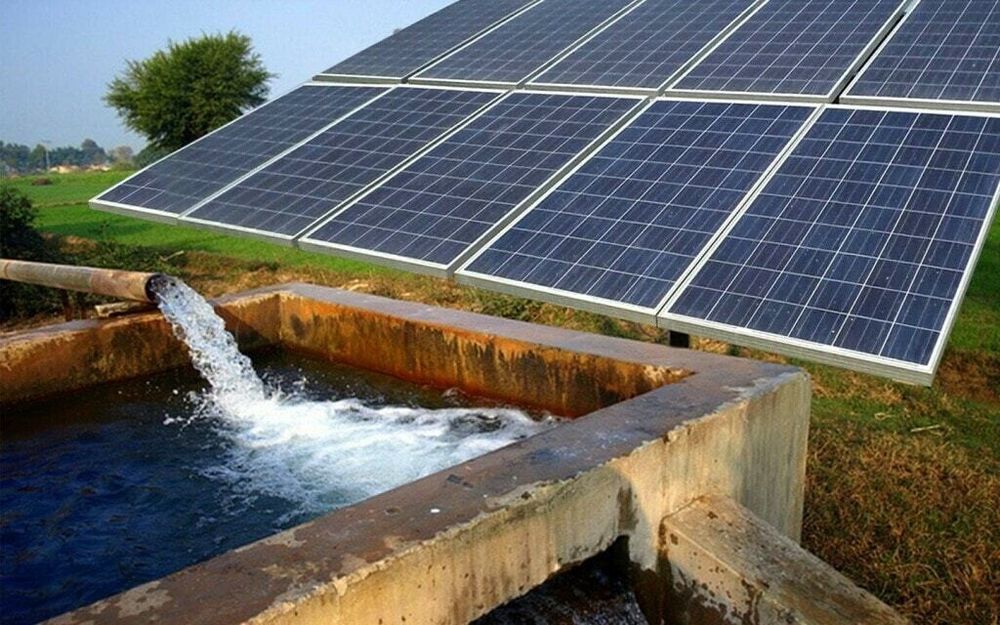
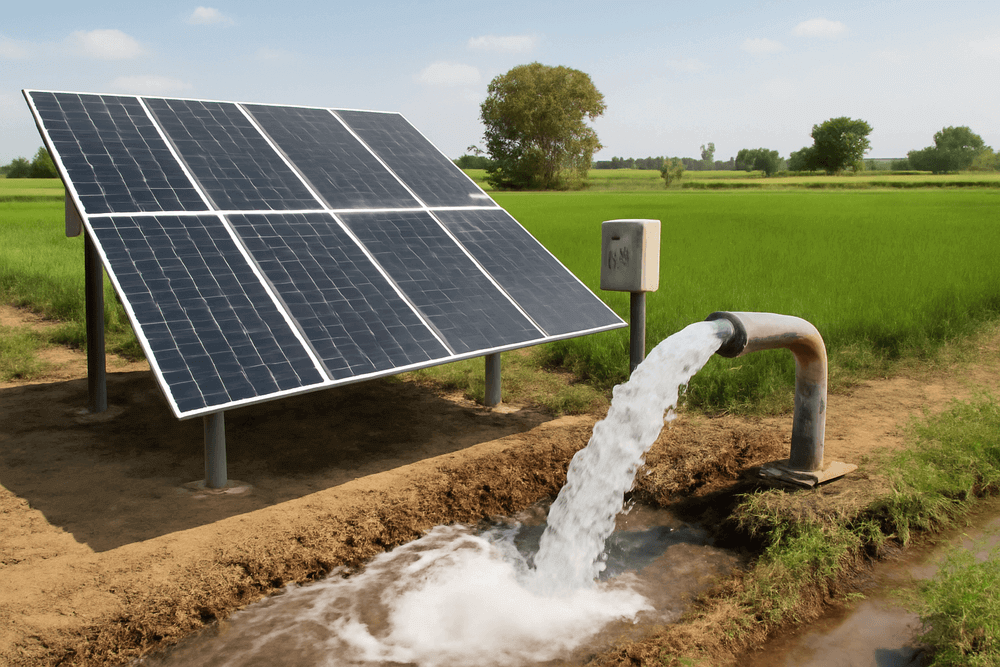
Groundwater Access in remote areas becomes economically viable. Solar pumps extract water from wells and boreholes without expensive grid connections or ongoing fuel costs. This capability opens previously unusable land to productive agriculture.
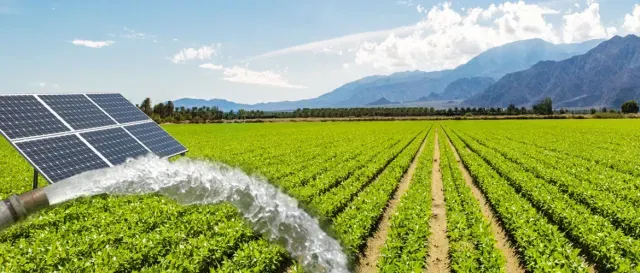
Consistent Irrigation Scheduling regardless of grid status protects yields. Load shedding and power outages can't disrupt solar-powered irrigation systems with battery storage. Crops receive water on optimal schedules determined by plant needs, not utility capacity.
Pumping Cost Elimination dramatically reduces irrigation expenses. Diesel pumping can cost $0.10-0.30 per cubic meter of water. Solar pumping costs approach zero after system payback. These savings accumulate to enormous sums over seasons and years.
Scalable Water Management allows irrigation expansion matching farm growth. Adding solar capacity costs less than extending power lines. Farmers can incrementally expand irrigated acreage as finances permit without massive infrastructure investments.
Drought Resilience provides water security during dry periods. When drought stresses rain-fed farms, solar-powered irrigation maintains production. This reliability protects income and enables farmers to capture premium prices when drought reduces overall supply.
Integration with Efficiency Technologies like drip irrigation maximizes water productivity. Solar power enables precision irrigation systems that minimize waste while optimizing plant health. The combination creates sustainable, high-yield agricultural systems.
Environmental Sustainability and Climate Adaptation
Modern agriculture must reduce environmental impacts while adapting to climate change. Solar energy addresses both imperatives simultaneously.
Carbon Footprint Reduction helps agriculture meet climate goals. Replacing diesel generators and grid electricity from fossil fuels eliminates significant greenhouse gas emissions. A typical farm solar system prevents 10-30 tons of CO₂ emissions annually equivalent to removing several cars from roads.
Sustainable Intensification produces more food with fewer environmental impacts. Solar-powered precision agriculture increases yields while reducing water use, fertilizer runoff, and pesticide applications. This intensification meets growing food demand without expanding agricultural land area.
Renewable Energy Leadership positions agriculture as a climate solution. Farmland covers vast areas ideal for solar deployment. Agriculture can lead renewable energy adoption, changing public perception of farming's environmental role.
Climate Resilience helps farms adapt to changing conditions. Solar power supports adaptive technologies like supplemental irrigation during drought, cooling systems for heat stress, and extended growing seasons in controlled environments. These capabilities help farmers cope with increasing climate variability.
Ecosystem Services improve when farms adopt sustainable practices. Solar-powered efficiency improvements reduce chemical runoff protecting waterways. Decreased groundwater pumping maintains aquifer levels. Agrivoltaic systems combining solar panels with crop production create microclimates beneficial to certain crops.
Regulatory Compliance becomes easier with clean energy. Environmental regulations increasingly restrict agricultural emissions and resource use. Solar-powered farms more easily comply with these requirements, avoiding penalties and maintaining market access.
Resilience Against Natural Disasters and Crises
Recent events pandemics, extreme weather, supply chain disruptions highlight the importance of farm resilience. Solar systems enhance ability to withstand shocks.
Hurricane and Storm Recovery occurs faster with solar-plus-storage. When grid power fails for days or weeks after disasters, solar-powered farms restore operations quickly. This capability protects perishables, maintains livestock care, and resumes income generation while competitors remain idle.
Fuel Supply Independence eliminates vulnerability to diesel shortages. Pandemics, wars, or supply disruptions that constrain fuel availability don't affect solar-powered operations. This independence proved crucial during COVID-19 when fuel supply chains disrupted globally.
Economic Shock Absorption cushions farms against price volatility. When energy prices spike due to geopolitical events or market disruptions, solar-powered farms maintain stable operating costs. This stability protects profitability during turbulent periods.
Grid Failure Immunity keeps critical systems operating. Even partial solar installations with battery backup can maintain essential functions water pumps, refrigeration, communication systems during extended outages. This minimal capability often means the difference between surviving disasters or suffering catastrophic losses.
Community Leadership during crises benefits rural areas. Solar-powered farms can provide emergency power, water pumping, or refrigeration to neighbors during disasters. This capability strengthens community bonds and demonstrates agriculture's societal value.
Labor Efficiency and Farm Management
Modern farms face acute labor shortages and rising wage costs. Solar-powered automation addresses these challenges effectively.
Automated Systems reduce labor requirements while improving outcomes. Solar power enables automatic irrigation controllers, livestock feeding systems, and environmental controls that operate without constant human supervision. Farmers allocate scarce labor to tasks requiring judgment and skill rather than routine monitoring.
Remote Monitoring and Control allows management from anywhere. Solar-powered sensors, cameras, and connectivity enable farmers to check conditions and adjust systems via smartphone. This capability improves work-life balance while maintaining operational oversight.
Safety Improvements reduce workplace hazards. Automated systems powered by solar energy minimize human exposure to dangerous tasks climbing silos, working near machinery, or entering confined spaces. This safety enhancement protects workers and reduces liability.
Skill Development attracts younger generations to farming. Modern solar-powered precision agriculture appeals to tech-savvy young people who might otherwise avoid traditional farming. This technology adoption helps address agricultural succession challenges.
Management Efficiency improves decision-making quality. Solar-powered data systems provide real-time information about field conditions, crop health, and resource use. Better information leads to better decisions and improved outcomes.
Property Rights and Land Use Optimization
Solar installations offer unique opportunities to maximize land productivity and value.
Agrivoltaics combines energy and food production on the same land. Elevated solar panels allow crop growth beneath, creating dual revenue streams. Certain crops leafy greens, berries, herbs actually benefit from partial shade in hot climates. This innovation effectively doubles land productivity.
Marginal Land Utilization generates income from unproductive areas. Solar arrays can occupy eroded slopes, rocky ground, or poorly drained areas unsuitable for crops. This capability monetizes otherwise idle land without sacrificing prime agricultural acreage.
Land Banking preserves agricultural property while generating income. Farmers approaching retirement can install solar systems providing revenue without intensive farming. This strategy maintains land in agricultural use rather than selling for development.
Diversified Income reduces dependence on volatile commodity markets. Solar energy production provides steady, predictable revenue complementing agricultural income. This diversification stabilizes farm finances and improves creditworthiness.
Property Value Enhancement increases estate value significantly. Farms with modern solar infrastructure attract premium prices from buyers seeking turnkey operations. Lenders also view solar installations favorably, potentially improving financing terms.
Future-Proofing Agriculture
Looking forward, solar systems aren't just beneficial they're necessary for agriculture's future viability and competitiveness.
Technological Integration positions farms for ongoing innovation. Solar power provides the energy foundation for emerging technologies AI-powered management systems, robotics, vertical farming, and synthetic biology applications. Farms without adequate power infrastructure cannot adopt these advances.
Market Access Requirements increasingly demand sustainability credentials. Major food buyers retailers, processors, exporters implement sustainability standards requiring energy efficiency and emissions reduction. Solar adoption helps farms meet these requirements and maintain market access.
Regulatory Anticipation prepares farms for likely policy changes. Carbon pricing, emissions caps, and renewable energy mandates appear increasingly probable. Farms adopting solar now avoid rushed, expensive compliance later while potentially benefiting from early-adopter incentives.
Generational Transition appeals to younger farmers prioritizing sustainability. Young people inheriting or entering farming often embrace technology and environmental stewardship. Modern solar-powered operations attract this demographic, supporting agricultural succession.
Innovation Platform enables experimentation and adaptation. Reliable, affordable energy removes barriers to trying new crops, production methods, or technologies. This flexibility helps farms adapt to changing markets, climate, and opportunities.
Overcoming Common Concerns
Despite clear benefits, some farmers hesitate. Addressing concerns helps overcome adoption barriers.
Initial Cost Worries diminish when considering total economics. While upfront investment is substantial, financing options, subsidies, and rapid payback make solar affordable. Farmers should evaluate total cost of ownership over system lifetime, not just initial price.
Technology Intimidation decreases with education. Solar systems are simpler than perceived essentially solid-state devices with no moving parts. Reliable installers provide turnkey solutions requiring minimal technical knowledge. Modern systems include monitoring apps making management intuitive.
Maintenance Concerns prove largely unfounded. Solar panels require less maintenance than tractors, irrigation systems, or most farm equipment. Occasional cleaning and annual inspections suffice. Reliability exceeds traditional generation methods significantly.
Aesthetic Objections fade when considering alternatives. While some consider panels unsightly, most find them less obtrusive than power lines, generators, or fuel tanks. Thoughtful placement minimizes visual impact. Many farmers express pride in their sustainable infrastructure.
Performance Skepticism yields to data. Decades of solar deployment prove reliability and performance. Modern panels maintain 80%+ output after 25 years. Performance guarantees protect investments against underperformance.
Implementation Strategies
Successful solar adoption requires thoughtful planning and execution.
Energy Audit identifies consumption patterns and needs. Professional audits reveal where energy goes, waste occurs, and efficiency improvements help. This information sizes solar systems appropriately and identifies complementary improvements.
Phased Installation spreads costs and builds confidence. Start with high-value applications irrigation pumps, cold storage proving benefits before full farm conversion. Incremental expansion matches cash flow and develops operational experience.
Professional Design optimizes system performance and economics. While DIY installations exist, professional designers ensure proper sizing, equipment selection, and permitting compliance. Their expertise prevents costly mistakes and maximizes return on investment.
Financing Options make solar accessible. Cash purchases, loans, leases, and power purchase agreements offer different advantages. Agricultural lenders increasingly offer specialized solar financing. Government incentives and tax benefits improve project economics significantly.
Integration Planning ensures solar complements existing operations. Coordinate solar deployment with irrigation upgrades, equipment replacement, or facility construction. Integrated planning maximizes synergies and minimizes disruption.
Conclusion
Solar systems have transcended optional status to become essential infrastructure for competitive, sustainable modern agriculture. The convergence of rising energy costs, climate pressures, technological demands, and economic imperatives makes solar adoption not just beneficial but necessary for long-term farm viability.
Every challenge facing modern agriculture energy costs, water scarcity, labor shortages, climate change, market pressures solar energy helps address. Simultaneously, solar systems enable opportunities precision farming, automation, sustainability leadership, diversified income that position farms for future success.
The question isn't whether to adopt solar energy but how quickly farmers can implement it. Early adopters gain competitive advantages that compound over time. Delays mean continued vulnerability to energy price volatility, missed savings, and reduced capacity to adopt emerging technologies.
Agriculture has always been about harnessing natural resources soil, water, sunlight produce food. Solar energy simply extends this tradition, directly capturing the same sunshine that grows crops to power farm operations. This alignment is natural, logical, and increasingly indispensable.
The future of agriculture is solar-powered. Farms embracing this reality today position themselves for decades of competitive advantage, operational excellence, and sustainable prosperity. Those delaying risk obsolescence in an increasingly technology-driven, sustainability-focused agricultural sector.
The sun rises every day, offering free, abundant energy. Modern agriculture must capture this resource as enthusiastically as we've historically captured rainfall and soil fertility. Solar systems aren't just technology adoption they're agriculture's evolution toward a sustainable, productive, resilient future.
Is your farm ready for the solar-powered agricultural revolution? Contact solar installers specializing in agricultural applications to explore how solar energy can transform your operations. The investment you make today in solar infrastructure will power farm success for generations to come. Don't just watch agriculture's future unfold power it with sunshine.